
![maxresdefault[1].jpg](https://static.wixstatic.com/media/cef8ab_8d4e0ddce355463e8edabd7c8937b6f6~mv2_d_2500_1406_s_2.jpg/v1/fill/w_124,h_70,al_c,q_80,usm_0.66_1.00_0.01,enc_avif,quality_auto/maxresdefault%5B1%5D.jpg)
When rails are better – Part II (or, if it's okay to dislike ugly railroads - see illustrative e
Oct 10, 2017
4 min read
For Part I, please refer to last week’s blog post, below.
As reported in the Adirondack Daily Enterprise, Acting Supreme Court Justice Robert Mann, Jr., (New York) has ruled that the NY state Department of Environmental Conservation and Department of Transportation may not execute their unit management plan of 2016 to remove 34 miles of active railroad and replace it with a trail. In his comments, he stated the arbitrary nature of the plan and noted that it violated several state laws.
The railroad is part of a State of New York designated “travel corridor,” and, the judge noted, such corridors are defined only for vehicle and railroad transportation, not for trails. The removal of tracks and construction of a trail would effectively remove the state-owned right of way from the travel corridor. As a matter of legal fact, the unit management plan for the corridor would no longer apply to the trail, thereby making the plan null and void in the first place.

Here we come to my previous blog entry, wherein I noted that ownership of railroad rights of way after the initial (building) railroad abandons is a complex minefield of potential claims. In the instant case, it was noted early in the proceedings that the state did not own the entire line, and therefore had no title to the entire corridor as required by NY law.
This last part makes me wonder how many trails have been hastily placed on old rights of way (there has been a virtual epidemic of trails since the idea was originally floated in the early 1960s) have been built without the real property owners’ knowledge or permission, and further, outside the applicable laws.
Okay, objectively and legally, this one was easy. The plan broke the law and didn’t take into account at least two owners of the right of way. To an advocate of a balanced transportation policy at the federal and state levels, the concept of turning a functioning railroad into a walking trail is ridiculous on the surface and an abomination when you really think about it.

In my mind, it would be equivalent to the now common practice of reducing the number of traffic lanes on a commercial street to add a bike lane. In abomination, it rises only slightly above turning those previous traffic lanes into dedicated bus lanes.
As I noted at the beginning of last week’s post, society is politically polarized, and the idea of zero tolerance has taken on a life of its own. Many people have no tolerance for transportation modes of any kind, but have no real idea how we would be able to function as a free society if transportation modes just disappeared. If there were no roads, would we all walk to work? Without a mode of transportation, we wouldn’t be able to take vacations, minor daily tasks would become monumental undertakings, and goods we take for granted would be available to us on only a sporadic basis, if at all.
(By the way, biking to work or to shop is great for those of us who are blessed with good physical condition and not of extended age. For those of us who do not fall into those categories, biking is not an option.)
Call me sensitive, but I think that society sees railroads as more of an irritant than any other mode of transportation, and that attitude seems to have roots in guilty environmentalism.

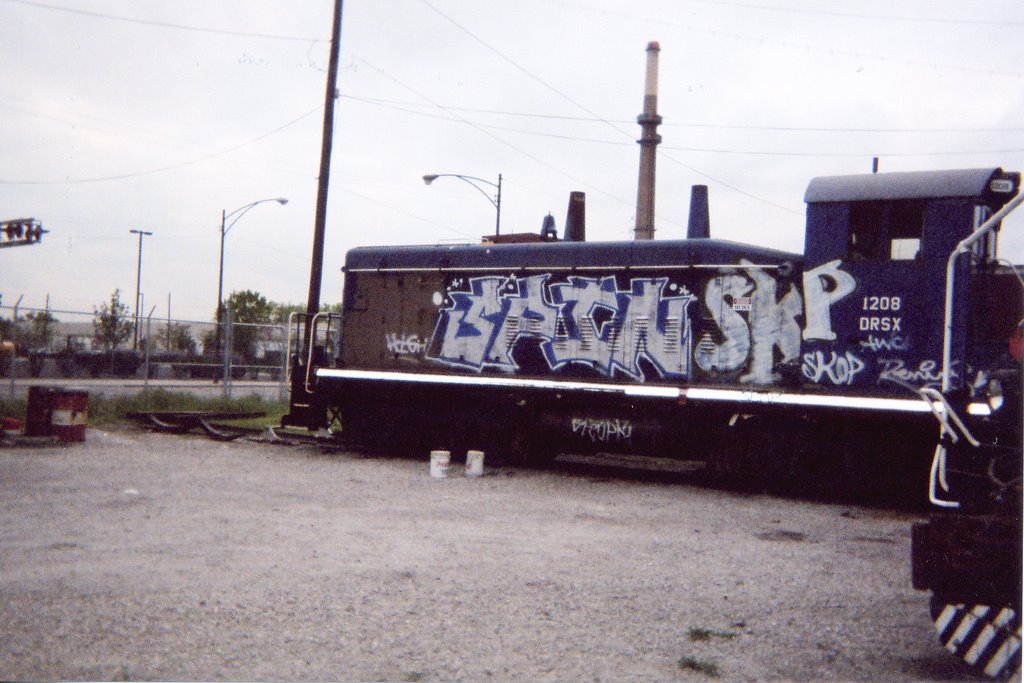
Aesthetically, tracks are “ugly” when compared to the smooth evenness of roads or runways. Even busy harbors with rotting docks and industrial cranes are seen as having the romantic beauty of the sea. Trains are noisy, and they don’t take their noise up to thirty-thousand feet for most of their trips. They have a past reputation for being dirty, although modern trains are the most environmentally friendly form of transportation on the planet. Trains are long, and block grade crossings for intolerable lengths of time. Heaven help the bicyclist who has to wait while holding up his bicycle with one leg. What an inconvenience.
Boats are long, too, and block streets when bridges have to be opened, but, there again, the romance of the sea is somehow more palatable than the romance of the high iron. High iron is main line railroad, for the uninitiated.
Some people just know ugly when they see it. Everything is not beautiful in its own way, in their minds.
It then becomes easy for people to take a perfectly viable, efficient and profitable form of transportation, demonize it in their minds, and then do what they can to turn it into something else. These days, a park, a trail, a nature preserve, or, sometimes, even a prison. Peeeeple! Choices!

In conclusion, let me say that rails aren’t always better than trails. Rails, however, are better than most other forms of transportation, and certainly better than no transportation at all, which is what we are heading for if we turn all the rails into trails.
Commerce being the lifeblood of a nation, let’s instead be cognizant of America’s marvelous transportation history, be the details considered good or bad by today’s so-called standards. Let’s not be so hung up on guilty environmentalism and obsession with recreational value that we forget the U.S. was the first nation to conquer a continent with railroads.
And if you’re feeling that guilty about it; please, go live in the wilderness somewhere without a motor vehicle and without a cell phone, and leave the rest of us to conduct business.
©2017 – C. A. Turek – mistertrains@gmail.com
(Charles A. Turek is a writer and novelist based in Albuquerque, NM. After four decades working in areas of the insurance industry related to transportation, he now writes on all aspects of American railroading. Charles is a political conservative but believes in public funding of passenger rail as a part of the federal government’s constitutionally conservative obligation to provide for defense and public infrastructure so that private enterprise may flourish.)


Comments